Author Archive


Grammy Career Day

The following is from my friends at Grammy. If you are interested, please let me know by the end of Thursday’s class, k? (And go see The Cops!)

Hello friends~

I just wanted to give you all a heads up on my favorite event that we do here that I have been working on for many months. It is GRAMMY Career Day and it is an incredible program… I’ve included the day’s schedule and workshop descriptions. If you are interested in coming down and checking out some of the workshops/performances, please let me know! I will send along all the room info to those interested by the end of the week. It is an incredible event and so much fun.

GRAMMY Career Day 2008

Friday, January 18th, 2008, 9am-2pm, Seattle Center

8:00-9:00 am – Registration (Seattle Center Pavilion A)

9:00-9:15 am – Jovino Santos-Neto performs as students arrive

9:15-9:25 am – Welcome, Introductions and Instructions-Ben London

9:45-10:45 am- Workshop 1 (descriptions below)

11:00-12:00 pm – Workshop 2 (descriptions below)

12:00 pm – Lunch break

1:00- 2:00pm – Performance by J.Pinder (Seattle Center Pavilion) and The Cops (The Vera Project)

2:00-2:15 pm – Closing – Ben London

Workshops

“The Language of Musical Improvisation”

In this workshop, pianist/composer, Jovino Santos-Neto, will explore different aspects of musical improvisation. Some the topics to be covered are: soloing on jazz tunes, modal and free improvisation, group interaction, rhythmic and melodic ideas, form and structure in improvisation, and more. Participants are welcome to bring their instruments to the workshop.

“Hey, That’s My Song”

Where do songs come from? How do you put words and music together? What do you do when you know what you want to say but not how to say it? Professional songwriter, Sue Ennis (Heart), leads an interactive songwriting exercise, showing how to jumpstart song ideas.

Bring in the Orchestra

Who writes the dramatic underscore that accompanies movies? How do they decide what is the right kind of music for each scene? How do you get started working in film music? Emmy Award winning composer, Hummie Mann, whose credits include “Robin Hood: Men in Tights,” discusses and demonstrates the art of film scoring.

“Hip Hop DIY/Turntablism”

What does it take to be a DJ? How do you get started as a Hip Hop artist? Join Vitamin D for an interactive look into the world of Hip Hop.

“Music Journalism 101”

How do you write about music? How do you describe what you’re hearing? Can you make a living as a music writer? The Stranger’s Kurt Reighley and Seattle Weekly’s Hannah Levin discuss how they got started, what a writer’s life entails and the different opportunities that are available in music journalism today.

“Music Photography”

You love taking photographs, but how do you get involved in the world of music? Meet Pearl Jam’s photographer, Lance Mercer (1992-1995), as they discuss how they started photographing musicians and their experiences behind the lens.

“Jigsaw Puzzle of Recording”

Have you ever wondered where those sounds came from? What do you think goes in to making a record? Recording Producer, Glenn Lorbecki (The Violent Femmes, The White Stripes), will discuss how he collaborates with artists; makes records and how you can get started recording music.

“Radio, Radio

Who decides what music gets played on the radio? How do you become a DJ? The End’s DJ Harms discusses his career in front of and behind the microphone.

“Rock Band Master Class”

What does it take to be in a rock band besides talent? Meet Jason Finn and Andrew McKeag from The Presidents of the United States of America and learn what it is like to be in a working rock band, what touring is like and how they write songs and how to best manage rehearsal time.

“Bring It, Screen It”

Got a killer idea for a t-shirt, poster, or stickers? Screen it yourself! Resident Vera Project screenprinters will show you how to make your designs reality with this staple of Do-It-Yourself (DIY) culture.

“Music and Video Games

Ever wonder about sound design within video games? Join the creators of Rock Band to learn about music in video games and sound design….and take a turn being a rock star by trying Rock Band out!
Adding Voice to Dark Days

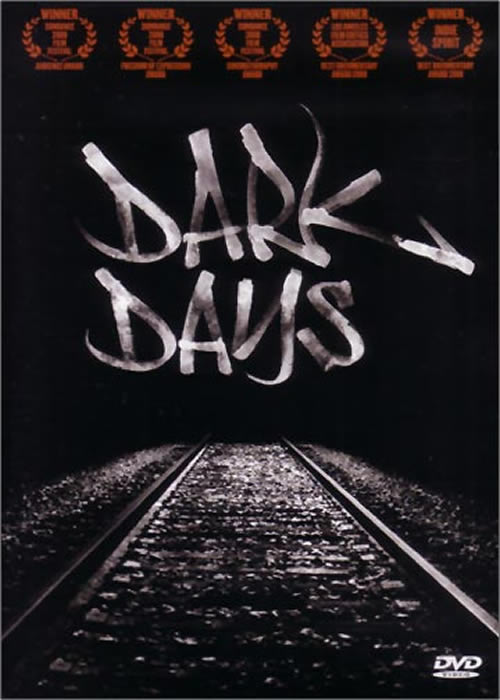
Dark Days

In this documentary, director Marc Singer captures — without the use of voice-over narration — the lives of the people who live underground in an abandoned section of New York’s railway system.

For this workshop, will we watch chapters 20, 21, and 22 of the film and attend to a few questions, which are simultaneously rhetorical, discursive, and ideological:

Who is speaking?

For whom, with whom, or about whom is she or he speaking?

How is she or he speaking?

When we are finished watching, you will return to your pairs, review your notes, and collaborate toward imagining a voice-over narrator for Dark Days.

To imagine that narrator, please address the following prompt in a single blog entry (categorized under “Dark Days”) that mobilizes Kozloff’s terms:

  • Describe the “voice” of your voice-over narrator and how her or his voice would sound. (Is your narrator in the film? You might also include gender, age, race/ethnicity, style of delivery, and so on).
  • Now, unpack the space and time from where your narrator would speak “over” the images. (From what position is your narrator speaking? The subway? An Amtrak office? Two days or fifteen years after the images?)
  • Next, generate some sample content and example lines of the “narration.” If possible, mention in what chapter/scene this content would be articulated.
  • Finally, consider your audience and the ideological consequences of your voice-over narration. For example — per Kozloff — is your narrator speaking for those who have been objectified? Or, to return to last week’s discussion of “service,” what communities or groups is your narrator “serving”? To what effects?

Once you have published your entries on your new voices, we will reconvene as a class and converse.

As always, let me know what questions you have.

The Audio-Visual Scene and Masking

notes

How about we use the three-step analysis in order to analyze the relationship between sound and genre? That way, we can navigate our way through Davis, Kozloff, Nordstrom, and your Response Paper 1.2.

We will first listen to two videos. No visuals, that is. Only sound. (Isolating the senses for analysis in this fashion is what Michel Chion refers to as “masking.”) As we listen, we will take careful notes. Active notes through what Les Back and Michael Bull call “agile listening,” which is more than merely “hearing” something. It is, in short, a learned technique.

In your note-taking, you might find R. Murray Schafer‘s “sonographic” tools productive:

  • Keynote Sound: backgrounded, fundamental tone against which other sounds are perceived (e.g., the sea)
  • Signal Sound: foregrounded sound to which the attention is particularly directed (e.g., a boat whistle)
  • Soundmark: a community sound which is unique or possesses qualities which make it noticed by people in that community (e.g., church bells)
  • The physical characteristics of the sound (i.e., acoustics–tempo, rhythm, pitch, envelope, tone)
  • The way in which sounds are perceived (i.e., psychoacoustics)
  • The sound’s function and meaning (i.e., social and cultural semiotics and semantics)
  • The sound’s emotional or affective qualities (i.e., aesthetics)

Ready to listen?

[Insert sound-time here.]

Now that you’ve listened to each, let’s get into pairs. In your pairs, please review each other’s notes and then produce one analysis of the sounds for each video. The two analyses should be included in a single blog entry (categorized under “Masking”) and each should:

  • Introduce what you heard (to the best of your knowledge).
  • Explain what you heard (using Schafers terms, if you wish).
  • Implicate what you heard in a particular film genre (e.g., horror, comedy, documentary, romance, or action-adventure) and explain your reasoning.

Finished? Now’s let us watch the videos to match sounds with visuals.

As we watch, we might consider the following questions as a class:

  • How did the visuals resonate with our analyses?
  • How did the visuals dissonate with our analyses?
  • How is sound effective in communicating or navigating us through the visual?
  • How did the sounds make us feel (with and without the visuals)?
  • How did the atmosphere or “soundscape” change once the visual was mapped onto sound?

Ultimately, this exercise should make you more familiar with Outcomes 1 (audience, context, and conventions) and 2 (support and evidence), as well as with the analysis of sound, media, and genre.

As we progress through the workshop, I’m sure questions will pop up. Let’s do our best to address them, k?

Best,

Jentery

Re-Cap of Today’s Class and Prepping for Thursday

Parental Advisory

Whatever the future of CDs, tapes, vinyl, and the like, I’m quite sure advisories are here to say.

But let us move away from speculation and into the immediate past and future. First, thank you for a great class today. The conversations went in a number of productive directions and opened up a slew of exciting inquiries, all of which are worthy of unpacking in the next few weeks.

And welcome, Aitza and Ryan!

Now, what’s in store for Thursday’s class in OUGL 101, and then a re-cap of today, with emphasis on why sonic culture studies matters in the first place:

For Thursday:

Regarding today, as I gather, here are some reasons — thanks to you — why sonic culture studies matters. It:

  • Encourages the study of individual perceptions and how context influences people’s perceptions.
  • Engages questions about art’s relation to technology. How might art and technology intersect and not be mutually exclusive terms?
  • Explores sound as a mode of communication and even activism.
  • Examines how we affectively respond to media. That is, how does media affect our bodies and our senses?
  • Entertains how sound suggests the physical presence of another.
  • Extrapolates the ways in which sound and sound technologies make us vulnerable.
  • Enlivens multi-modal education by appealing to different learning styles.
  • Enriches political conversations about sound’s intersections with gender, race, ethnicity, and sexuality.
  • Enables critical approaches to the consumption of popular culture and media.

Yes! Words that — without any reason — all begin with “e”!

Other than providing these compelling reasons, we also:

  • Practiced the three-step analysis by attending to sounds from last quarter.
  • Considered how writing — like music and other sound recordings — might be a “layered” practice of sustaining multiple “tracks,” rather a linear, cause-and-effect mode of reasoning.
  • Collaborated to answer a single question about Davis and Nordstrom.
  • Learned a bit more about each other.
  • Began a quarter-long inquiry into sonic culture and media activism.
  • Addressed and mobilized the importance of stakes (or the “so what?”) of any inquiry (e.g., why does sonic culture studies matter in the first place).

If you have more to add — including questions, concerns, or polemics, then feel free to do so in your own blog entry or through a comment on this entry. Cool?

See you on Thursday in OUGL 101.

Best,

Jentery

Blog Prompt #3: Voice-Over Narration?

Mic

For the balance of your sequence one writing, you’ll be analyzing a film with some degree of voice-over narration. Before you begin, perhaps some history and some terms would help you approach the very notion of voice-over, hence the Kozloff readings (here and here) for Thursday’s class (on January 17th).

Please carefully read the Kozloff texts and annotate them in your own blog entry. After your notes, please address the following in that same entry:

  • How might someone object to the use of voice-over narration in film and why?
  • Why do you think Kozloff feels the need to defend voice-over narration and how does she go about doing so?
  • How familiar are you with voice-over narration and how does Kozloff’s writing intersect with your familiarity? (Here, feel free to provide some example films, if you wish. You might also return to Nordstrom’s e-portfolio for points as well.)
  • Finally, given your own experiences with voice-over narration in tandem with Kozloff’s arguments, what film are you considering for analysis in your sequence one writing? (You can list several films, if need be, although I urge you to start refining soon. See the list I provided if your ideas are running dry.)

If you would like to come to class even more prepared, then include some questions that you have about the film(s) you are considering for sequence one. These questions can be broad (e.g., “How is voice-over narration functioning in the film I selected?”) or quite specific (e.g., “How long must a voice-over scene be for a productive analysis?”).

Let me know what questions you have, and please categorize this thing under “Blog 3 – Voice-Over?” and post it before Thursday’s class.

Also, please read and comment on at least two posts by your peers. What did you learn from them? Have you seen the films they are considering? If so, what suggestions or experiences do you have?

Heaps of thanks!

The Medium is the Message/Massage?

Also per the Davis talk, Marshall McLuhan is an important name in various circles (academic and otherwise) for his work with new media, technology, society, and culture.

Below are sides A and B of the album, The Medium is the Massage. Give it a listen and notice how pastiche – a mix of different sounds and voices – functions. We hear McLuhan as our “narrator,” as other voices and sounds interject. Not dissimilar from what a DJ does or…hmmm…maybe what writers do, too? Enjoy!

 
icon for podpress  The Medium is the Massage, Side A: Play Now | Play in Popup | Download

 
icon for podpress  The Medium is the Massage, Side B: Play Now | Play in Popup | Download

Reginald’s Radio

On the evening of December 24, 1906, Reginald A. Fessenden used the alternator-transmitter to send out a short radio program from Brant Rock, Massachusetts. This broadcast is believed to be the first two-way, trans-oceanic wireless radio transmission, paving the way for a century of broadcasting to come. As people in the U.S. and elsewhere would soon realize, listening and receiving information would take on an entirely new, “disembodied” connotation in the 20th and 21st centuries.

Here’s a recreation of the broadcast for your ears. Note the voice. Sound familiar?

 
icon for podpress  Reginald's Radio: Play Now | Play in Popup | Download

Theremin? You Got It, Gnarls.

Per the Davis talk, just in case you’ve never heard or seen a theremin before:

Recap (or Genealogy) of Today’s Class and Prepping for Tuesday

Bumblebee

In today’s class, we:

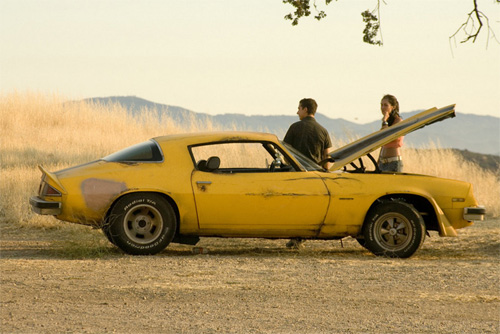
Did I miss anything? Oh, robots, cars, and “interest” to be paid. More on those later, I suppose.

In the meantime, don’t forget to register for service-learning! Registration ends on Monday!

As for Tuesday’s class, please:

We’ll begin Tuesday’s class with a group discussion of Davis and Nordstrom, their relation to understanding “sonic culture,” and why studying sound matters in the first place.

Until then, be in touch with questions, concerns, and the like.

(Schedule for the intro meetings in Art 347 below my name.)

Best,

Jentery

Tuesday, January 10th in Art 347

11:50 – Sam

12:10 – Seth

12:30 – Ashley

12:50 – Juhi

1 – Jenna

1:10 – Nathan

1:20 – Krysta

Thursday, January 17th in Art 347

11:50 – Sohroosh

12 – Francis

12:10 – Miriam

12:20 – Alexandra

12:30 – Casey

12:40 – Aly

1:30 – Jillian

1:40 – Scott

1:50 – Ainsley

2:30 – Colleen

Keyword Collaboratory on “Service”

Keywords

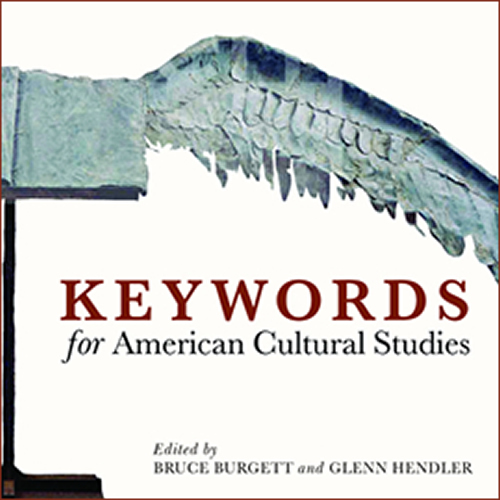
This quarter, as an extension of Bruce Burgett (UW) and Glenn Hendler’s (Fordham) Keywords for American Cultural Studies text, we will be participating in a “keyword collaboratory” on the word “service.” In fact, we are the first 121 class at the UW to do so. But what does a “collaboratory” entail, exactly?

Well, I would like to consider the collaboratory as a form of media activism. Some others might call it a Wiki. Regardless of how we describe it, what counts is what we do with the thing.

Through the collaboratory, we will be tracing the seemingly infinite valences and trajectories of the word “service,” with an emphasis on your service-learning experiences. Rather than settling upon a single definition or history of the word, the goal of the keyword project is to examine the cultural instantiations of “service” in different contexts, the debates that emerge from its use, and the modes through which it has been mobilized for particular purposes. A genealogy, if you will.

Next week, we’ll network “service” with some other texts in order to see what questions and problems might arise. In the meantime, let’s consider what this particular form of media activism has at stake:

  • It will be an opportunity for you — as undergraduates — to publish your writing for a large audience.
  • It will be read by the public, with students and university faculty as the target audience.
  • It will serve as a representation of the University of Washington and, by proxy, the Expository Writing Program and the Carlson Center.
  • It will be used, added to, and revised by future instantiations of English 121 (and possibly other service-learning courses at UW or elsewhere).
  • It will be a space for you to work through the problematics of “service” (that is, not just the issues that emerge from the word, but why those issues matter in the first place).

To get started, as a class, let’s review the OED definition of “service” (the verb):

  • How do the definitions vary?
  • What discourses and contexts might they be associated with?
  • How do they tie in with your blog today on service-learning?
  • How might they intersect with your service-learning at Boys and Girls Clubs?

I’m really looking forward to this project, everyone. As we collaborate, I’ll help you write for an online, public forum, and it is my hope that this process — with all of its stakes — will be a productive learning experience for all of us.

Onward!