Adding Voice to Dark Days
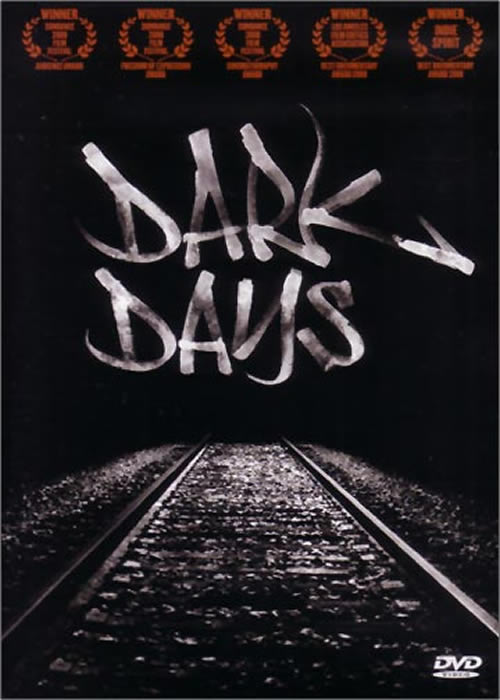
In this documentary, director Marc Singer captures — without the use of voice-over narration — the lives of the people who live underground in an abandoned section of New York’s railway system.
For this workshop, will we watch chapters 20, 21, and 22 of the film and attend to a few questions, which are simultaneously rhetorical, discursive, and ideological:
Who is speaking?
For whom, with whom, or about whom is she or he speaking?
How is she or he speaking?
When we are finished watching, you will return to your pairs, review your notes, and collaborate toward imagining a voice-over narrator for Dark Days.
To imagine that narrator, please address the following prompt in a single blog entry (categorized under “Dark Days”) that mobilizes Kozloff’s terms:
- Describe the “voice” of your voice-over narrator and how her or his voice would sound. (Is your narrator in the film? You might also include gender, age, race/ethnicity, style of delivery, and so on).
- Now, unpack the space and time from where your narrator would speak “over” the images. (From what position is your narrator speaking? The subway? An Amtrak office? Two days or fifteen years after the images?)
- Next, generate some sample content and example lines of the “narration.” If possible, mention in what chapter/scene this content would be articulated.
- Finally, consider your audience and the ideological consequences of your voice-over narration. For example — per Kozloff — is your narrator speaking for those who have been objectified? Or, to return to last week’s discussion of “service,” what communities or groups is your narrator “serving”? To what effects?
Once you have published your entries on your new voices, we will reconvene as a class and converse.
As always, let me know what questions you have.