Archive for 2008/01/16


Voice Over Narration

    Sarah Kozloff’s Invisible Storytellers: Voice-Over Narration in American Fiction Film begins by juxtaposing cinematic storytelling with oral storytelling to introduce voice-over narration as a combination of the two: the ancient oral style superimposed on the cinematic story. She calls narrated films “hybrids” and even though she calls them “half-retrograde, half-pathbreaking, and half dissembling,” she clearly supports voice-over narration as a “fascinating dance between pose and actuality.” Kozloff goes to great lengths to define voice-over narration, formally defining it as “oral statements, conveying any portion of a narrative, spoken by an unseen speaker…” Kozloff then concedes that there are different types of voice-over narrators such as “authorial” and “character” narrators. Towards the end of the introduction, Kozloff clarifies the purpose of her work: “for my readers to hear such films with my ears.”

    Kozloff’s other text, she begins with the claim that “voice-over narration remains an integral part of moviemaking—so common that we often overlook its contribution and ignore its development.”She then presents her definition of voice-over narration much like she did in Invisible Storytellers. Kozloff then proceeds to outline the history of voice-over narration from its first appearance in 1933’s The Power and the Glory to voice-over in modern films such as Fight Club. This long history of voice-over narration begs the question that Kozloff then asks: “So why are we still debating the legitimacy of voice-over?” Kozloff then provides some of the reasons why film aficionados don’t like voice-over narration, primarily that film is unique as a storytelling device because of its ability to convey a story nonverbally. Kozloff cites film theorists such as  Jeffrey Youdelman and Bill Nichols to support her warrant that “in many circumstances narration is a more forthright, honest approach to the subject matter than pretending that the represented scenes speak for themselves or that editing is noncoercive.” Kozloff then counters the film aficionados’ critiques by offering several reasons why voice-over narration is an important and artful component of film, such as that “when [voice-over narration] is well-executed, it opens up inimitable avenues for filmmakers.” Kozloff substantiates her argument with many concrete examples from well-known films such as Apocalypse Now and Seabiscuit.

     After reading Kozloff’s texts, I have learned that one objection that many people raise against voice-over narration is that it negates film’s unique ability to convey a story nonverbally in a way that theatre and other storytelling mediums cannot. I think that Kozloff feels she must defend voice-over narration because few people rise to defend it against the many criticisms it receives and that voice-over narration serves its purposes well and efficiently conveys important information to the viewer. I find Kozloff’s texts easy to understand because I am very familiar with voice-over narration such as in A Christmas Story, War of the Worlds, March of the Penguins, Arrested Development, Seabiscuit, Fight Club, and 300. I support Kozloff’s arguments because I believe these films would not have been as powerful without the voice-over narration. I am considering analyzing the use of voice-over narration in the film 300.
 

At first in class when the topic about voice over was brought up the main things that came to mind were movies where they cut out cursing and you can totally tell the difference, music videos with the clean version of the song with original video, or even a preformance with a pre-recorded track. A few different situations came up in my mind about what there could be possibly be written about voice over and pertinent to this class.

 After reading the two pieces the topic on voice over was a lot more interesting and even more indepth than I thought possible. Kozloff made many strong points on the defense for voice over and the creativity. I did not think there was a situtation that a voice over would be a good or necessary thing but she definitly made her case. The artistic side of narration versus what I originally believed to be a cheap cop out or way to please over sheltering mothers is cleary defended in both of her pieces. 

~~~~~~~~~~~~~~~~~~~~~~~~~~~~~~~~~~~~~~~~~~~~~~~~~~~~~~~~~~~~~~~~~~~~~~~~~~~~~~~~

Enrty part II, responding to the prompt after reading the pieces for the second time:

Notes on Invisible Storytellers: Voice-Over Narration in American Fiction Films

  • It is very true that the average moviegoer watches many movies without noticing voice-over narration (myself included)
  • voice=medium, someone must be speaking, no text
  • over= off screen, in a different time and space than the time and space of the discourse
  • narration= content
  • verb tense and the ways things are stated strongly affects whether is can be considered voice-over narration or not
  • 6 elements very interesting
  • *thought: many movies that are made after books seem to have proper voice-over narration because the books are already narrated?
  • verb tense in again very particular
  • I haven’t seen any of her example movies yet…
  • The different types of voice-over narration and the many things that make narration not voice-over are getting complicated and rather particular/detailed

Notes on A Defense – and history – of Voice-pver Narration

  • Piece makes her statements more clear and less particular about what is and what isn’t voice-over narration (while my original beliefs of what is was were incorrect this makes it more clear than the confusion of the first piece)
  • History of voice-over narration was not at first by choice but by the only means of being able to produce sound
    • later becoming popular, it stuck around even when new technology was available
  • Still listing many titles, I have not seen any, until CLUELESS… finally a title I recognize and  can relate to voice-over narration
  • Interesting and clear distinction of “The art of cinema connects Image A via editing, camera, or lens movement with Image B and the eddect is meaning C, D, E expressed without explanation….” 
  • States many quotes of critics, some are seen below in answering prompt questions but the counter arguments are helpful in persuading to her beliefs in V-ON
  • My dad is in love with the movie Apocalypse Now… but again I have never seen it (voice-over tends to be in sci-fi and older movies… not so much the movie genre I tend to watch…)

Prompt:

It is clear how many different people object to voice-over narration because Kozloff quotes tons of different people’s beliefs and objections to V-ON portraying how much they do not believe it to be artisit, classy, etc. Kozloff definitly feels the need to defend V-ON because it is something she is passionate about and she is well aware by the many negative quotes how and why people do not think its affective and do not use it in film. She very thoroughly defends V-ON however, by clearly and repeatedly stating the oppositions counter arguments and then clarifying their flaws to prove her opinions/points. Examples:

  • “And God help you if you use voice-over narration in your work, my friends. God help you…”
  • “…using it is insulting the audience”
  • showing is better than telling.. etc
  • it is singular, requires no thought, imagination, etc
  • “But why bother, it is just a cheap shortcut, the last resort of the incompitent.”

I was not familiar at all with voice-over narration. When I thought I knew anything about it- as you can read in my first entry above I was clearly wrong… After readind the first piece by Kozloff I was not anymore clear on what V-ON was or wasn’t- I was more confused. But then reading the second piece it became clear to me the importance of V-ON and what exactly it is… which I tried to portray in my notes.

Ideas: The Notebook, Stranger Than Fiction, Clueless, The Shinning, 300 

voice-over narration

“A Defense—and History—of Voice-Over Narration” by Sarah Kozloff

The part about “lecturers” is interesting. I always thought the first silent films had intertitles. I did not know “lecturers” existed.

Kozloff’s use of the narration in Bladerunner is an interesting example. I watched part of it (maybe all of it-I can’t remember) when I was in middle school, and I was somewhat lost. I wonder if it was the director’s cut.

Invisible Storytellers: Voice-over Narration in American Fiction Film
by Sarah Kozloff

“downright quirky” (p. 2)

When I read Kozloff’s description of “authorial” and “character” narration, I thought of the booming voice in Transformers,  “BEFORE TIME BEGAN…” And then that made me think of the narrator in the opening seen of The Lord of the Rings: The Fellowship of the Ring. I am not going to make a statement about the quality of these movies, but I think critics of narration get there ammunition from movies like these.

The fact that Kozloff wrote a book about voice-over narration means she must be passionate about narration. She writes in “A Defense—and History—of Voice-Over Narration” that more people have attacked the use of voice-over narration than have defended it. Maybe she wants to remind people that filmmaking is not all about the visual aspects.

From what Kozloff writes, it seems like people object to narration because of their ideas of what film should do. A director who is all about the visual aspects of filmmaking might view narration as a cop out, as Kozloff shows with the quote of McKee’s Story. If a director thinks that a film should tell an engaging story, he or she might use narration when it helps this purpose.

I have watched countless movies with voice-over narration, but it is hard for me to remember whether a particular movie has voice-over narration or not. I did not even realize that Dr. Strangelove has voice-over narration until I saw it on Jentery’s list. I forgot that Fightclub is narrated by the protagonist until I read the reference to it in Kozloff’s article. It is so common I never think about it.

Right now, I have in my possession three movies with voice over narration: Dr. Strangelove, American Beauty, and SLC Punk. I have only watched Dr. Strangelove so I do not know which one I want to analyze yet.

Voice-Over

When reading these two texts by Kozloff, I can say that I learned a lot about the concept of Voice-over Narration. Of course, I have seen films that use this technique, but I have never really thought that deeply about the artistic side of it, and how it could essencially ‘make or break’ a movie. Here are some notes I took as a general overview of what I found important in the texts:

  • “Adding voice-over narration to a film creates a fascinating dance between pose and actuality, words and image, narration and drama, voice and ‘voice’” <<This quote gives the concept quite a dramatic twist, something good to think about.

  • “By applying ‘literary’ narrative theory to film, I hope both to further our understanding of cinematic narrative’s specific characteristics and to test the universality of several key types of contermporary critical lore”<< I think that this demonstrates Kozloff’s position on the idea of voice-over. She wants for us to not only understand it, but also embrace it.
  • Definition of Voice Over Narration: (Gives me a deeper understanding of what it really means!!)

    Voice– the medium, we must hear someone speaking

    Over- pertains to the relationship between the source of the sound and the images on the screen. The voice comes from another time and space

    Narration- Relates to the content of the speech: someone is in the act of communicating a narrative—that is, recounting a series of events to an audience

  • “Verb tense provides crucial clues as to the difference between a narration or simply thinking out loud (these are two different things)”<<I think this is a very valid point. Simply thinking out loud shows a less artistic side in my opinion. With a narration there should be a purpose or motive behind the words, not simply to fill time or awkward transitions.

  • Complete Narratives break down to six elements: (This once again helps me to understand the concept in a more organized way)

    1. The abstract- a short summary of the story that is about to be provided
    2. The orientation- identification of time, place, characters, and activities
    3. The complicating action- the unfolding of the story’s events
    4. The Resolution- the climax
    5. The evaluation- commentary of the point of the story
    6. The Coda- and epilogue, often bridging the gap between story time and the time of narration
  • Argues that voice over can convey important information or creates a special, intimate relationship with the viewer.<<This is a great argument by Kozloff. I agree that it is easy to have a more intimant relation to the character if we are hearing what is “inside their head”. This is a great way for a film-maker to draw an audience in and really get them submerssed in the film in my opinion.

  • “The technique would not have been used so often and would not be so worthy of our attention if it never soared”<<Once again great point. I have seen many successfully made movies that I enjoyed involving the voice-over technique. Why then do so many people argue it? I dont understand this. Like my last comment, I believe it is a great way to connect an audience to a character when done correctly. It has had success, so therefore it can’t be all that bad can it?

  • “A fallback charge against voice-over narration is that using it is insulting to the audience. Voice-over narration is suspect because it is a means of “telling” rather than “showing.” “Telling” is judged as a mark of laziness and/or condescension.”<< This is a contrasting point that I can also agree with to some reasoning. All through school so far, all of my english teachers have stressed the point that when expressing our ideas we should show and not tell. On the other hand, in a film, we have the visuals to go along with what is being said, which I think could be enough to get the point accross. This is a point I would be interested to hear others opinons on.

After taking all of these notes and analyzing the reading, I have to say I found this concept of voice-over narration to be quite interesting. At first I could not think of specific movies that fit the criteria, but after reading there are a few that jumped out at me. Clueless is a movie I have always loved, and so I think it would be interesting to work with. Although the main character Cher is a prissy valley girl (a stereo type many are disgusted by) I think this is what makes the movie interesting. Her mindset is completely different than most, and it would be fun to uncover more behind this movie. A couple others I am considering are American Beauty and About a Boy, two other great movies in my opinion.

  •  

A Better Way to Tell a Story

The first text by Kozloff, the introduction, attempts to define voice-over narration at both a literal and exemplary standpoint. The ‘voice’ quite simply means spoken by a human. ‘Over’ is defined by the fact that the ‘voice’ cannot be seen on camera in that scene or any scene by that matter. The ‘voice’ is speaking from another “time and space”, so it is technically reviewing ‘over’ the scene. Finally, narration involves describing the scene, usually done before the scene takes place, to provide context for what the viewer is about to witness. Also, the narrating usually involves using the past tense, the past tense conveys an assurance, and not a possibility.

It is interesting to note, that in the introduction, Kozloff states that the cinema is the youngest form of storytelling, while oral anecdotes are the oldest, most commonly used forms of storytelling. The combination of the two provide a link from one generation to the next. The voice-over technique began in the thirties so it is by now means a new idea. It also points to the fact that a large number of movie-goers don’t realize it’s there until someone brings up it after the movie, or in our case, we have to study its prevalence and siginificance in a class!

The way I reacted to these two texts was mainly with compliance and epiphany. There were many parts of her text, where I found myself saying “Oh yeah!” or “Is that what it is?” Two shows that came to mind while reading Kozloff’s work were “The Wonder Years” and “Arrested Development”. Aside from the humorous nostalgia that came to my mind, I asked myself a question that Kozloff asks in her text: “If I took the narrator out, would the show change? And if it did change, would it be for the better or for the worse?” I found in both cases that the show would be much worse. There are parts when the narrator will complete a sentence that a character begins, simply because the character in that scene chose to halt his or her sentence on the basis of either a brain fart or a desire to hide something. In that situation, when the narrator finishes that sentence off with the truth, there is a moment of brilliance, and it can make any viewer laugh or cry depending on the scene, because you know, but several characters within the scene do not know.

So what does it come down to? Why debate the presence of voice-over narration? Kozloff defends voice-over narration because there are so many critics opposed to its use. They feel that the technique draws away from the art of cinema, saying that it is “a cheap shortcut, the last resort of the incompetent”. How voice-over narration taints the art of cinema is by “telling” the viewer of certain emotions or events that “should be shown” through methods such as point of view, editing, pantomime, or facial expressions.

I see cinema as a culmination of many major art forms such as photography, literature, music, theater, dance, etc. In that respect, it is an enhanced art form borne from the previous art forms. Therefore, applying the ancient art form of oral story-telling can only help the objective of the modern movie. If the deception and creativity of the director or screenplay writer is questioned, the discretion of what they put it in or how much they reveal to the viewer should be the point of debate.

Does voice-over narration affect your interpretation of the film piece? I feel no, because the point of voice-over narration is to enhance, either through providing context or adding entertainment value. However, how you watch the movie depends on who is telling the story. Two major methods of voice-over narration are first-person reflection and third person omniscient. In the case of the former, I tend to always look beyond what the main character is saying, simply because the movie is geared towards his or her perspective. Regarding the latter method, I see the “all-knowing” narrator as only giving me the right clues to basing opinions on which characters I like or dislike. Kozloff supports this argument when she says the voice-over narration creates “a special, intimate relationship with the viewer”. A movie should immerse its audience. That’s why I think people made inventions like the IMAX, or surround sound; people want movies to be increasingly more of an experience. The narrator adds that feature, and while it’s not included in all movies, its purpose is to make us feel more important, like we are really there, and the story-telling does cinema justice.

Two movies I think would be interesting to analyze are “Fight Club” and “L.A. Confidential”.

#3- Voice-Over?

Notes on movies:

-Captions: a narrating device

-Flashbacks: off screen speech or interior monologue

-Voice-over narration: viewers hear someone recount of series of events from a time and space different from that simultaneously pictured

-Narrators: They can be a third person voice outside the story of events or a character/participant in the story world


                People might object to the use of voice-over narration because it takes away from the “cinema.”  The argument seems to be that movies have been trying to separate themselves from theater and literature and they do so by showing rather than telling.  The haters of narration think that it is the lazy way out.  That a producer or director that decides to include narration is not using their most artistic and creative abilities and is rather taking the easy way out.  I think in essence, the disapproval of narration stems from directors who are trying to turn an amusement, cinema, into an art.

                 Kozloff feels the need to defend voice-over narration because she sees how much it can add to a movie and not detract.  She says that voice-over narration is “no more or less inherently valuable or cinematic then any other element of film. And when this device is well-executed, it opens up inimitable avenues for filmmakers.”  I think she has a great point.  Narration is no different than great camera angles or intuitive lighting.  All of these elements are what make a good movie great.  Also, she explains how voice over really does add to a movie’s content especially historically.  A narrator is able to set the historical scene for the listener with the listener having to do background research just to watch their $13.00 movie.  In terms of business, the average customer does not go to the movies to see a work of art, rather they go for entertainment and escape.  They also don’t want to pay $13.00 to see a movie where they are lost because they don’t know the historical context. 

                I wouldn’t say that I am very familiar with voice-over narration.  I actually don’t really notice it and I am going to have to spend a few minutes thinking about movies……hold on…………. “Simon Burch,” “Clueless,” “Forrest Gump,” that’s all.  Kozloff’s writing did not really intersect with my familiarity except for her saying that most people don’t really think about narration.  I think that I am going to analyze “Simon Burch.”

Voice Over

In Sarah Kozloff’s text she explains the details, thought, and process of voiceover narration. Exactly how voiceover works and how it is more of an art in cinema than just a narration. The other text disagrees. It considers voiceover the least cinematic thing in movies. It states anyone can do voiceover. It’s really nothing. I think Sarah feels the need to support voiceover because she is adimate about how it adds to movies. She kind of explains it first and builds up to explain its importance and help in cinema. I have heard voice over but like she mentioned in the text we often don’t think of it. I’ve listened to seabiscuit, christmas story, the war and i can’t think of anyone else. Those are about the only ones and I really dont pay attention to it in movies.

Grammy Career Day

The following is from my friends at Grammy. If you are interested, please let me know by the end of Thursday’s class, k? (And go see The Cops!)

Hello friends~

I just wanted to give you all a heads up on my favorite event that we do here that I have been working on for many months. It is GRAMMY Career Day and it is an incredible program… I’ve included the day’s schedule and workshop descriptions. If you are interested in coming down and checking out some of the workshops/performances, please let me know! I will send along all the room info to those interested by the end of the week. It is an incredible event and so much fun.

GRAMMY Career Day 2008

Friday, January 18th, 2008, 9am-2pm, Seattle Center

8:00-9:00 am – Registration (Seattle Center Pavilion A)

9:00-9:15 am – Jovino Santos-Neto performs as students arrive

9:15-9:25 am – Welcome, Introductions and Instructions-Ben London

9:45-10:45 am- Workshop 1 (descriptions below)

11:00-12:00 pm – Workshop 2 (descriptions below)

12:00 pm – Lunch break

1:00- 2:00pm – Performance by J.Pinder (Seattle Center Pavilion) and The Cops (The Vera Project)

2:00-2:15 pm – Closing – Ben London

Workshops

“The Language of Musical Improvisation”

In this workshop, pianist/composer, Jovino Santos-Neto, will explore different aspects of musical improvisation. Some the topics to be covered are: soloing on jazz tunes, modal and free improvisation, group interaction, rhythmic and melodic ideas, form and structure in improvisation, and more. Participants are welcome to bring their instruments to the workshop.

“Hey, That’s My Song”

Where do songs come from? How do you put words and music together? What do you do when you know what you want to say but not how to say it? Professional songwriter, Sue Ennis (Heart), leads an interactive songwriting exercise, showing how to jumpstart song ideas.

Bring in the Orchestra

Who writes the dramatic underscore that accompanies movies? How do they decide what is the right kind of music for each scene? How do you get started working in film music? Emmy Award winning composer, Hummie Mann, whose credits include “Robin Hood: Men in Tights,” discusses and demonstrates the art of film scoring.

“Hip Hop DIY/Turntablism”

What does it take to be a DJ? How do you get started as a Hip Hop artist? Join Vitamin D for an interactive look into the world of Hip Hop.

“Music Journalism 101”

How do you write about music? How do you describe what you’re hearing? Can you make a living as a music writer? The Stranger’s Kurt Reighley and Seattle Weekly’s Hannah Levin discuss how they got started, what a writer’s life entails and the different opportunities that are available in music journalism today.

“Music Photography”

You love taking photographs, but how do you get involved in the world of music? Meet Pearl Jam’s photographer, Lance Mercer (1992-1995), as they discuss how they started photographing musicians and their experiences behind the lens.

“Jigsaw Puzzle of Recording”

Have you ever wondered where those sounds came from? What do you think goes in to making a record? Recording Producer, Glenn Lorbecki (The Violent Femmes, The White Stripes), will discuss how he collaborates with artists; makes records and how you can get started recording music.

“Radio, Radio

Who decides what music gets played on the radio? How do you become a DJ? The End’s DJ Harms discusses his career in front of and behind the microphone.

“Rock Band Master Class”

What does it take to be in a rock band besides talent? Meet Jason Finn and Andrew McKeag from The Presidents of the United States of America and learn what it is like to be in a working rock band, what touring is like and how they write songs and how to best manage rehearsal time.

“Bring It, Screen It”

Got a killer idea for a t-shirt, poster, or stickers? Screen it yourself! Resident Vera Project screenprinters will show you how to make your designs reality with this staple of Do-It-Yourself (DIY) culture.

“Music and Video Games

Ever wonder about sound design within video games? Join the creators of Rock Band to learn about music in video games and sound design….and take a turn being a rock star by trying Rock Band out!

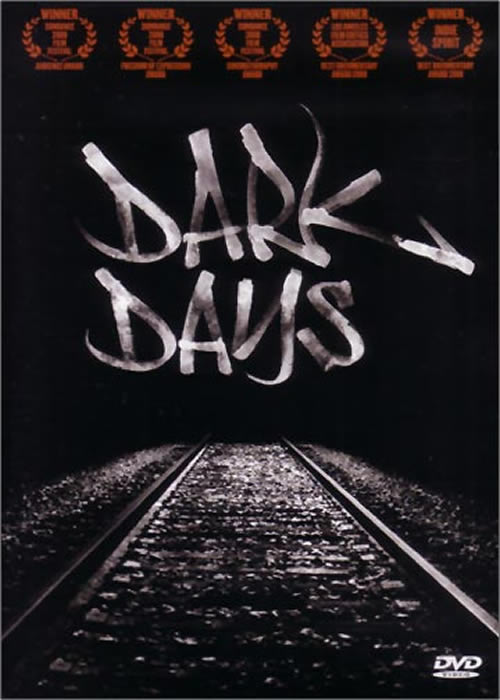
Adding Voice to Dark Days

Dark Days

In this documentary, director Marc Singer captures — without the use of voice-over narration — the lives of the people who live underground in an abandoned section of New York’s railway system.

For this workshop, will we watch chapters 20, 21, and 22 of the film and attend to a few questions, which are simultaneously rhetorical, discursive, and ideological:

Who is speaking?

For whom, with whom, or about whom is she or he speaking?

How is she or he speaking?

When we are finished watching, you will return to your pairs, review your notes, and collaborate toward imagining a voice-over narrator for Dark Days.

To imagine that narrator, please address the following prompt in a single blog entry (categorized under “Dark Days”) that mobilizes Kozloff’s terms:

  • Describe the “voice” of your voice-over narrator and how her or his voice would sound. (Is your narrator in the film? You might also include gender, age, race/ethnicity, style of delivery, and so on).
  • Now, unpack the space and time from where your narrator would speak “over” the images. (From what position is your narrator speaking? The subway? An Amtrak office? Two days or fifteen years after the images?)
  • Next, generate some sample content and example lines of the “narration.” If possible, mention in what chapter/scene this content would be articulated.
  • Finally, consider your audience and the ideological consequences of your voice-over narration. For example — per Kozloff — is your narrator speaking for those who have been objectified? Or, to return to last week’s discussion of “service,” what communities or groups is your narrator “serving”? To what effects?

Once you have published your entries on your new voices, we will reconvene as a class and converse.

As always, let me know what questions you have.

The Audio-Visual Scene and Masking

notes

How about we use the three-step analysis in order to analyze the relationship between sound and genre? That way, we can navigate our way through Davis, Kozloff, Nordstrom, and your Response Paper 1.2.

We will first listen to two videos. No visuals, that is. Only sound. (Isolating the senses for analysis in this fashion is what Michel Chion refers to as “masking.”) As we listen, we will take careful notes. Active notes through what Les Back and Michael Bull call “agile listening,” which is more than merely “hearing” something. It is, in short, a learned technique.

In your note-taking, you might find R. Murray Schafer‘s “sonographic” tools productive:

  • Keynote Sound: backgrounded, fundamental tone against which other sounds are perceived (e.g., the sea)
  • Signal Sound: foregrounded sound to which the attention is particularly directed (e.g., a boat whistle)
  • Soundmark: a community sound which is unique or possesses qualities which make it noticed by people in that community (e.g., church bells)
  • The physical characteristics of the sound (i.e., acoustics–tempo, rhythm, pitch, envelope, tone)
  • The way in which sounds are perceived (i.e., psychoacoustics)
  • The sound’s function and meaning (i.e., social and cultural semiotics and semantics)
  • The sound’s emotional or affective qualities (i.e., aesthetics)

Ready to listen?

[Insert sound-time here.]

Now that you’ve listened to each, let’s get into pairs. In your pairs, please review each other’s notes and then produce one analysis of the sounds for each video. The two analyses should be included in a single blog entry (categorized under “Masking”) and each should:

  • Introduce what you heard (to the best of your knowledge).
  • Explain what you heard (using Schafers terms, if you wish).
  • Implicate what you heard in a particular film genre (e.g., horror, comedy, documentary, romance, or action-adventure) and explain your reasoning.

Finished? Now’s let us watch the videos to match sounds with visuals.

As we watch, we might consider the following questions as a class:

  • How did the visuals resonate with our analyses?
  • How did the visuals dissonate with our analyses?
  • How is sound effective in communicating or navigating us through the visual?
  • How did the sounds make us feel (with and without the visuals)?
  • How did the atmosphere or “soundscape” change once the visual was mapped onto sound?

Ultimately, this exercise should make you more familiar with Outcomes 1 (audience, context, and conventions) and 2 (support and evidence), as well as with the analysis of sound, media, and genre.

As we progress through the workshop, I’m sure questions will pop up. Let’s do our best to address them, k?

Best,

Jentery